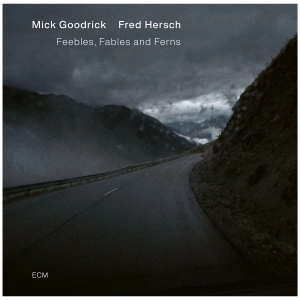

CD from the "Touchstones" Series.
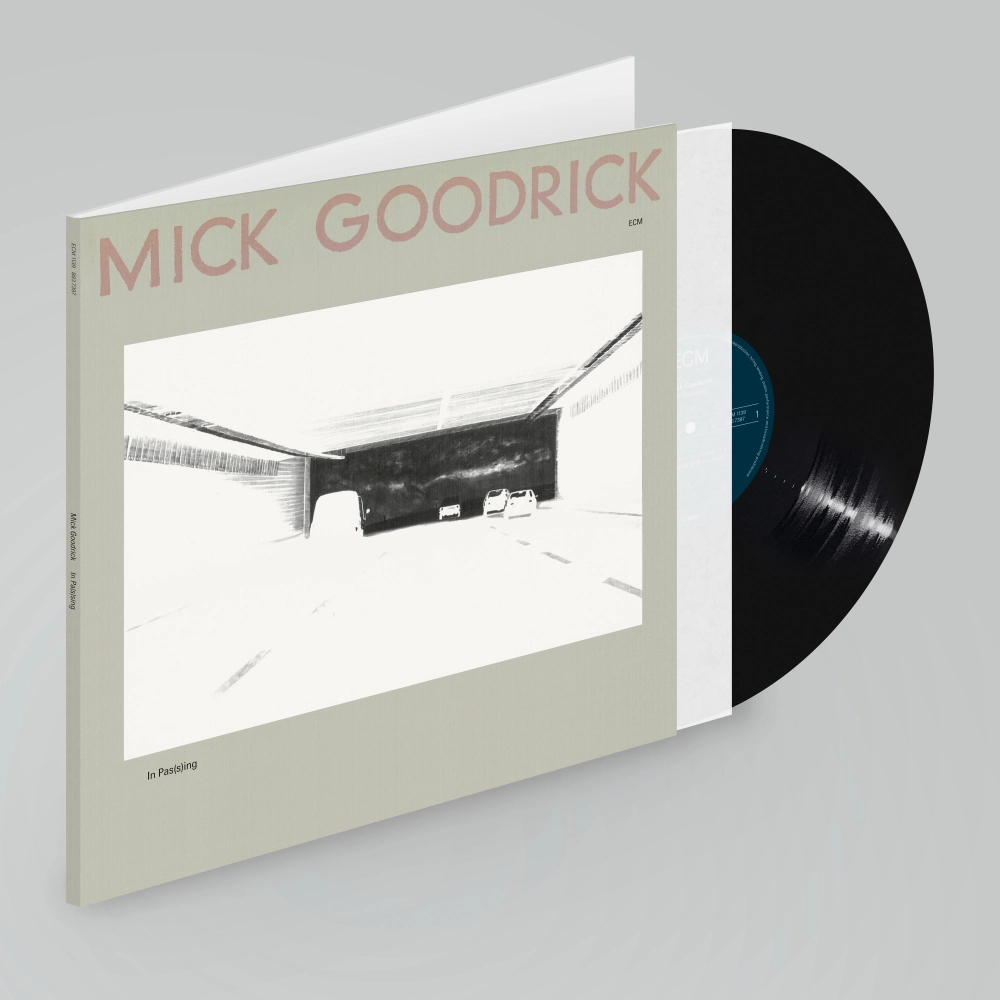
LP from the "Luminessence" Series.
Mick Goodrick (1945-2022), hailed as “technically among the finest players around” by Downbeat magazine in their review of this album, was a subtle master on the guitar and an equally understated composer – both qualities to the fore on this, his only leader-recording for ECM. Pianist Fred Hersch called “him the guitar whisperer,” whereas John Scofield has noted how he “got to play with [Mick], which was a valuable learning experience—not to mention fun. I love his ECM album ‘In Pas(s)ing’, a special piece of work which fully holds up to today’s listeners.” For In Pas(s)ing, the guitarist who greatly contributed to Gary Burton’s successful run of recordings for ECM in the 70s was joined by an A-list group of accompanists with John Surman, mainly heard on baritone saxophone here, bassist Eddie Gomez and drummer-legend Jack DeJohnette. Joining in airy, lyrical harmony, the four improvisors deliver a quietly eruptive session, full of discrete interplay and secretly memorable melody. Melody Maker called Goodrick a “composer and leader who is content to allow his music to pirouette gracefully on the spot,” in their review of the album from 1979, expanding: “Of the current ECM-school guitarists, he seems to possess the best blend of traditional virtues with a modern conception. Fashionably unpushy, he nonetheless puts a signature on the music through his cool, singing amplified tone, firm but sparingly dealt backgrounds, and beautiful interplay with Surman.” Also commenting on the sidemen, the article continues, “this is, in any case, among the best recorded Surman in years. Naturally, Gomez and DeJohnette are vital to the record’s success – The momentum they provide is almost supernaturally discreet, but absolutely real.” The album was recorded at Talent Studio in Oslo, in November 1978 and produced by Manfred Eicher.
Re-issued as part of ECM’s Luminessence series, In Pas(s)ing arrives in a tip-on gatefold jacket with new liner notes by Joel Harrison and photos from the archive.
LP aus der "Luminessence" Serie.
CD aus der "Touchstones" Serie.
Mick Goodrick (1945–2022), den das Magazin Downbeat in seiner Rezension dieses Albums als „technisch einen der besten Gitarristen überhaupt“ pries, war ein subtiler Meister der Gitarre und ein ebenso zurückhaltender Komponist – beide Qualitäten treten auf dieser einzigen ECM-Aufnahme unter seinem eigenen Namen deutlich hervor. Der Pianist Fred Hersch nannte ihn „den Gitarrenflüsterer“, während John Scofield bemerkte: „Ich durfte mit Mick spielen, was eine wertvolle Lernerfahrung war – ganz abgesehen davon, dass es Spaß gemacht hat. Ich liebe sein ECM-Album In Pas(s)ing – ein besonderes Werk, das auch heute noch relevant klingt.“ Für In Pas(s)ing wurde der Gitarrist, der maßgeblich zu Gary Burtons erfolgreicher ECM Albumserie der 1970er Jahre beigetragen hatte, von hochkarätigen Begleitern unterstützt: John Surman, hier überwiegend am Baritonsaxophon zu hören, Bassist Eddie Gomez sowie Schlagzeuglegende Jack DeJohnette. In weit-offenem, lyrischem Zusammenspiel entfalten die vier Improvisatoren eine leise-eruptive Session voller filigraner Interaktion und heimlich einprägsamer Melodien. Das Magazin Melody Maker bezeichnete Goodrick in seiner Rezension von 1979 als einen „Komponisten und Bandleader, der seiner Musik erlaubt an Ort und Stelle anmutig Pirouetten zu drehen“, und führte weiter aus: „Unter den gegenwärtigen Gitarristen der ECM-Schule scheint er die gelungenste Verbindung von Tradition mit einer modernen Konzeption zu besitzen. Modisch unaufdringlich versieht er die Musik dennoch mit einer unverwechselbaren Handschrift – durch seinen kühlen, singenden verstärkten Ton, sparsam eingesetzte, aber feste Hintergründe und das wunderbare Zusammenspiel mit Surman.“ Auch die Mitmusiker würdigte der Artikel ausdrücklich: „Dies ist jedenfalls eine der besten Aufnahmen Surmans seit Jahren. Natürlich sind Gomez und DeJohnette entscheidend für den Erfolg der Platte – der Vorwärtsdrang, den sie erzeugen, ist beinahe übernatürlich diskret, aber absolut real.“ Das Album wurde im November 1978 im Talent Studio in Oslo aufgenommen und von Manfred Eicher produziert.
Im Rahmen von ECMs Luminessence Reihe neu aufgelegt, erscheint In Pas(s)ing in einem hochwertigen tip-on Klappcover mit neuen Linernotes von Joel Harrison sowie Photographien aus dem Archiv.