16.10.2026 | Reviews of the week
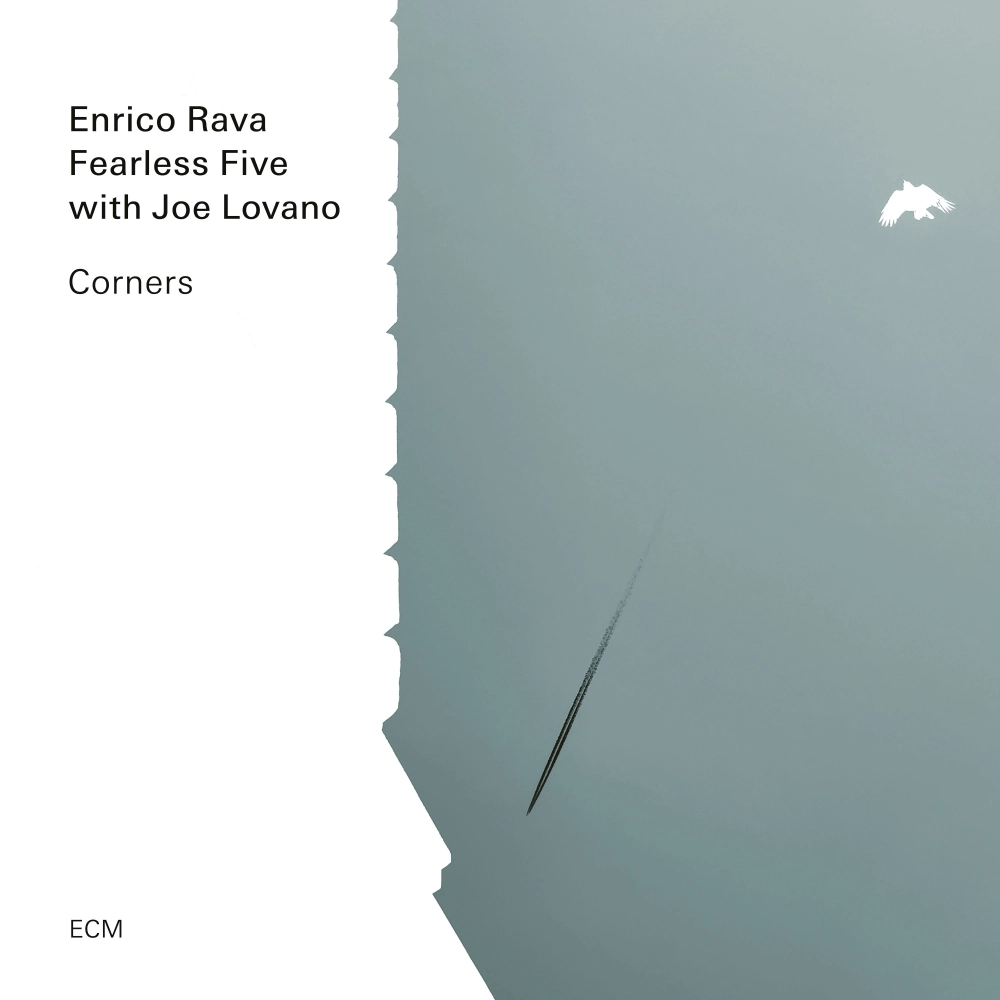
The freshly released album Corners by Enrico Rava and his new group Fearless Five featuring Joe Lovano is greeted with great acclaim by media in the US, UK, Switzerland and Italy
Illustrious Italian trumpeter and composer Enrico Rava, a longtime force on the European jazz scene, returns with his Fearless Five ensemble, welcoming guest saxophonist Joe Lovano, a powerhouse improviser who had collaborated with the bandleader on the live recording ‘Roma’ (ECM, 2019). All members of the quintet contribute compositions, trusting the bandleader’s candidly investigative approach that opposes rigid perceptions. Rava’s ‘Certi Angoli Segreti’, an exceptionally beautiful tune first recorded in 1998, gracefully materializes with beautiful color shades. Francesco Diodati’s guitar gives it a particular touch, later soloing with motivic ability and acerbic distortion; Francesco Ponticelli’s dynamic bass builds a solid foundation with drummer Evita Polidoro; Lovano’s storytelling comes with delightful details; trombonist Matteo Paggi’s expressions are grounded and exploratory; and Rava excels in his improvisational fluctuations—sometimes angular and outside, other times hypnotically flowing and distinctively melodic. […] If the rhythm section kicks into high gear on Lovano’s pieces, it eases into the softer lyrical flow of Diodati’s ‘Sin Peso’, a burnished ballad suggesting a bolero feel, and Polidoro’s ‘Le Mie Gambe’, which, unfolding in 3/4, features the drummer as a vocalist of surprising intensity. Since the early ’70s, Rava—who turned 87 in August—has led a series of highly rewarding albums, and ‘Corners’ is no exception.
Filipe Freitas, Jazztrail
For his latest album Corners, trumpeter Enrico Rava combines two of his recent partnerships: with his ongoing semi-regular collaboration with saxophonist Joe Lovano, and with his latest band Fearless Five. The latter – guitarist Francesco Diodati, bassist Francesco Ponticelli, trombonist Matteo Paggi, and drummer/singer Evita Polidoro – have already proven themselves able to hang with the eclectic Rava no matter what path he chooses to race down, from post bop to chamber jazz to avant improv. So the versatile Lovano fits right in. […] Outside of himself and Lovano, Rava invites everyone to contribute tunes, with each member of the Five proffering up at least one, including Polidoro’s lovely ‘Le mie gambe,’ Diodati’s dreamy ‘Sin peso,’ Ponticelli’s atmospheric ‘Ça va san dire,’ and Paggi’s soulful ‘Mamma.’ There’s no creative whiplash here – every song sounds like a logical progression from the one before it. These musicians’ chemistry, as directed by Rava, makes ‘Corners’ a tight, engaging, and stimulating good time.
Michael Toland, The Big Takeover
Enrico Rava’s latest release, ‘Corners’, lets its character unfold through the shared connections between the musicians. The little shifts of emphasis, the knowing exchanges, and the sense that nobody is quite sure where the next musical turn will lead are an important part of the music. The album is built on trust, which is especially evident whenever Enrico Rava and Joe Lovano meet across the music. […] Rava’s bandmates in the Fearless Five belong to a much younger generation, yet he clearly treats them as musical equals. Matteo Paggi on trombone, guitarist Francesco Diodati, bassist Francesco Ponticelli and drummer Evita Polidoro bring their own identities to the music. Having everyone contribute compositions makes ‘Corners’ feel genuinely collective. The band formed almost spontaneously at a concert outside Rome in 2022, when Rava was so impressed by their chemistry that he decided to make it his new group. That chemistry is the album’s greatest strength. […] Lovano’s relationship with Rava feels like the arrival of an old musical friend who instinctively finds his place. […] On ‘Corners’, that connection seems even more relaxed. The two listen closely: Rava can leave a phrase hanging for Lovano to pick up, reshape or deliberately take somewhere unexpected.
Mike Gates, UK Vibe (Five stars)
Rava ist ein Geschichtenerzähler, wie sein frühes Vorbild Chet Baker. Allerdings macht nicht ein (Trompeten-)Ton seine Musik, sondern eine ganze Sprache. Bei all seiner Virtuosität vermeidet er trompetistische Art pour l’art. Nach wie vor sind seine Improvisationsflüge mal verspielt, mal nachdrücklich, immer gebrochen zwischen Ironie und Melancholie. Jetzt hat er sich für seine jüngste CD abermals mit einem soul brother getroffen, dem Saxofonisten Joe Lovano, seinerseits ein Meister der Balance zwischen Abstraktion und Einfühlung, expansiven Freiheitsausbrüchen und inniger Melodiösität. […] Jetzt trifft Lovano auf Ravas neue Band, die sich den zutreffenden Namen Fearless Five gab: Matteo Poggi an der Posaune, Francesco Diodati an der (E-)Gitarre, Francesco Ponticelli am Bass und Evita Polidoro an den Drums und für ein (eigenes) Stück als Sängerin. Die Musik von ‘Corners’ (so heisst das Album) ist eine mit viel Biss und Entschlossenheit und gleichzeitig grosser Offenheit, viel Raum (zumal für die beiden Protagonisten Rava und Lovano), viel Freiheit (auch in kollektiven Improvisationen) und viel Melomanie. Rava esteso, sozusagen. Rava extended.
Peter Rüedi, Weltwoche
L’anno scorso avevamo colto il valore di questa sua nuova creatura, i Fearless Five (nome mutuato, si sa, da un brano dell’album Enrico Rava Quartet del ‘78), con l’omonimo, notevole disco. Per questo strepitoso ‘Corners’, a Rava (sempre più al flicorno e meno alla tromba), Matteo Paggi al trombone, Francesco Diodati alla chitarra, Francesco Ponticelli al contrabbasso ed Evita Polidoro alla batteria e voce, si è aggiunto il magnifico Joe Lovano (nel 2019 già partner del trombettista in Roma) coi suoi sax tenore e tárogató. L’album, inciso nel luglio del 2025, ‘goniometricamente’ inizia con la nota pagina raviana ‘Certi angoli segreti’, qui rivelatasi approdo di suoni e stili sotto un manto devoto a Nino Rota, a cui segue ‘Sin Peso’ di Diodati, sorta di tonale episodio ornettiano tra soavi spleen e desiderio, dove trombone, tromba sordinata e tenore intersecano dubbi e desideri sotto astratte geometrie chitarristiche. Caso a sé è ‘Le mie gambe’ di Polidoro (da lei cantata), momento di jazz impressionista e poesia degno di una menzione al Tenco (Ponticelli è da applauso!). Di Lovano è, invece, ‘Sun Rava’, che al di là del geniale titolo coniuga davvero certe aspirazioni della new thing con quell’amore per la felicità melodica che ha sempre caratterizzato il destinatario del brano: belli i call and response, un Paggi molto Roswell Rudd, un Diodati liricamente obliquo, la coppia ritmica tra Palle Danielsson e Jon Christensen e un tenore da antologia. Scordatevi di Philip Glass e dell’Einstein sulla spiaggia, in ‘Hitchcock at the Beach’ di Rava (già presente in Jazzitaliano Live 2006) vige la delicatezza, con la tromba doppiata all’inizio dalla voce e con un Lovano lirico e descrittivo, cosa reiterata da quest’ultimo (ma al tárogató) pure in ‘Tone, Shape and Colour’, sua traccia giovanile di astratta cantabilità. È Ponticelli che firma ‘Ça Va Sans Dire’, visionaria e surreale prova di strategico sottrarre a cui segue la raviana ‘Bowery Dance’, dal caracollante andamento binario che nasconde multiple sorprese. Termina l’album ‘Mamma’ di Paggi, una carezza notturna a cui l’autore dona una certa tenerezza, amabilmente colorata da tenore e tromba. Il grande Stanisław Jerzy Lec scrisse: ‘La somma degli angoli di cui ho nostalgia è certamente superiore a 360°’. Pure quelli di questo disco.
Ernesto D’angelo, Buscadero
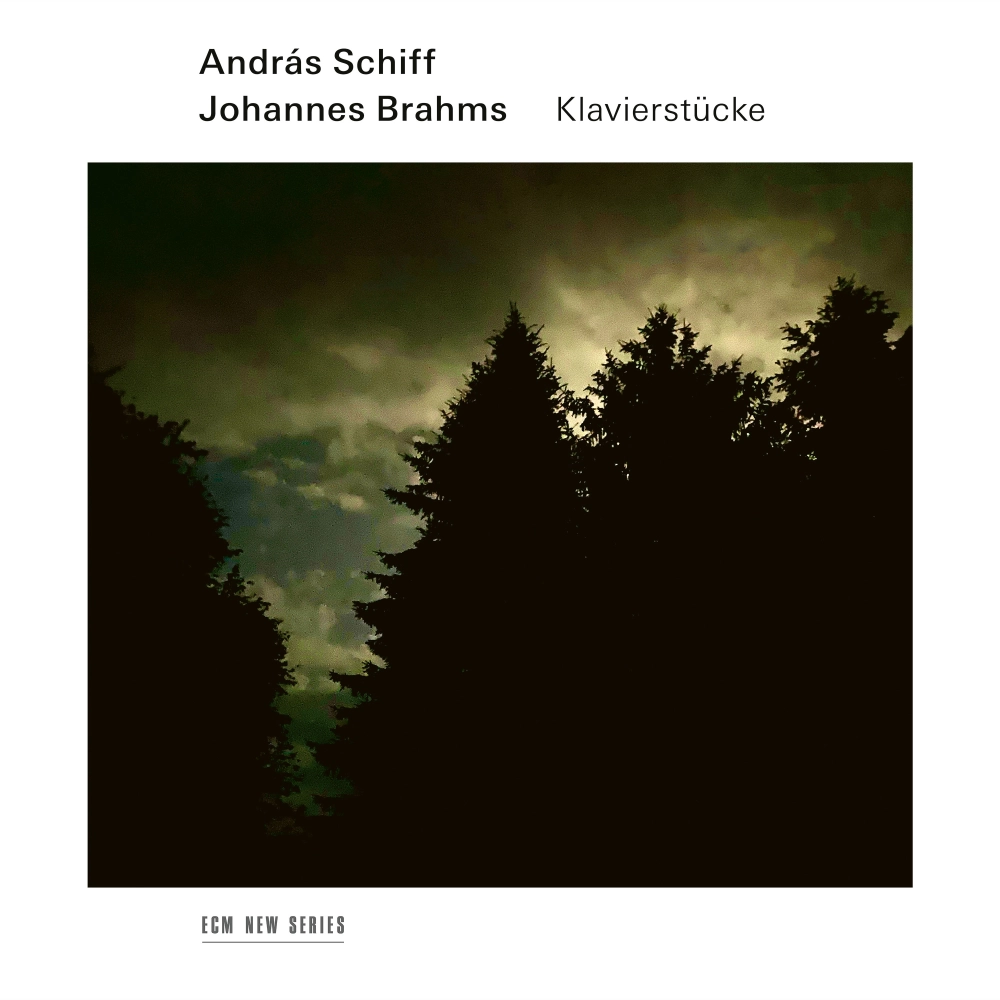
Sir András Schiff’s recording of Johannes Brahms’s intimate Klavierstücke is recommended in a German daily paper
Der Pianist András Schiff überwältigt mit seiner Neuaufnahme der späten Klavierwerke […] Schiff wärmt seinen Brahms, aber er hüllt ihn nicht in Daunen. Davor bewahrt die Musik nämlich neben dem tiefsinnig-virtuosen Spiel des Pianisten der durchaus spröde, eigenwillige Klang des historischen Blüthner-Flügels, der wundervoll authentische Signale sendet. Schiff gilt gewiss als Spezialist für originales Instrumentarium, wird aber nie zum Prinzipienreiter. Dieser Blüthner trennt Linien, statt sie zu verkleben; unter Schiffs schier kompositionsanalytischen Fingern hört man Brahms‘ kontrapunktische Meisterschaft grandios. Doch eine Wissenschaftsübung sind diese Aufnahmen keineswegs. Es ist herrlicher später Brahms, mit warmen Farben, bestem Reifegrad. Das Es-Dur-Intermezzo op. 117 spielt niemand so lauter, so anrührend, so klug wie Schiff. Er ist Wissenschaftler und Poet in einem und versteht seinen Brahms voll kommen.
Wolfram Goertz, Rheinische Post
An early UK reaction to the re-issue of Jan Garbarek’s album Rites within the Luminessence vinyl-series
What does the future sound like when it’s been and gone? In the case of Jan Garbarek‘s double album ‘Rites’, released as two CDs in 1998, and now appearing on two LPs as part of the Luminessence vinyl series, this bygone future still sounds pretty damn good. Greeted with great praise on its first appearance, partly because it appeared to represent a significant re-engagement with contemporary musical modes and associated technology, ‘Rites’ still has the ability to startle. Its relatively modest adoption of electronic sampling and looping techniques, with Garbarek credited for ‘synthesizers, samplers and percussion’ as well as his customary soprano and tenor saxophones, remains strikingly effective. It is also all accomplished so tastefully that the radical expansion of Garbarek’s signature sound-world was able to be received as a perfectly natural extension of his usual instrumental resources.
Phil Johnson, UK Jazz News

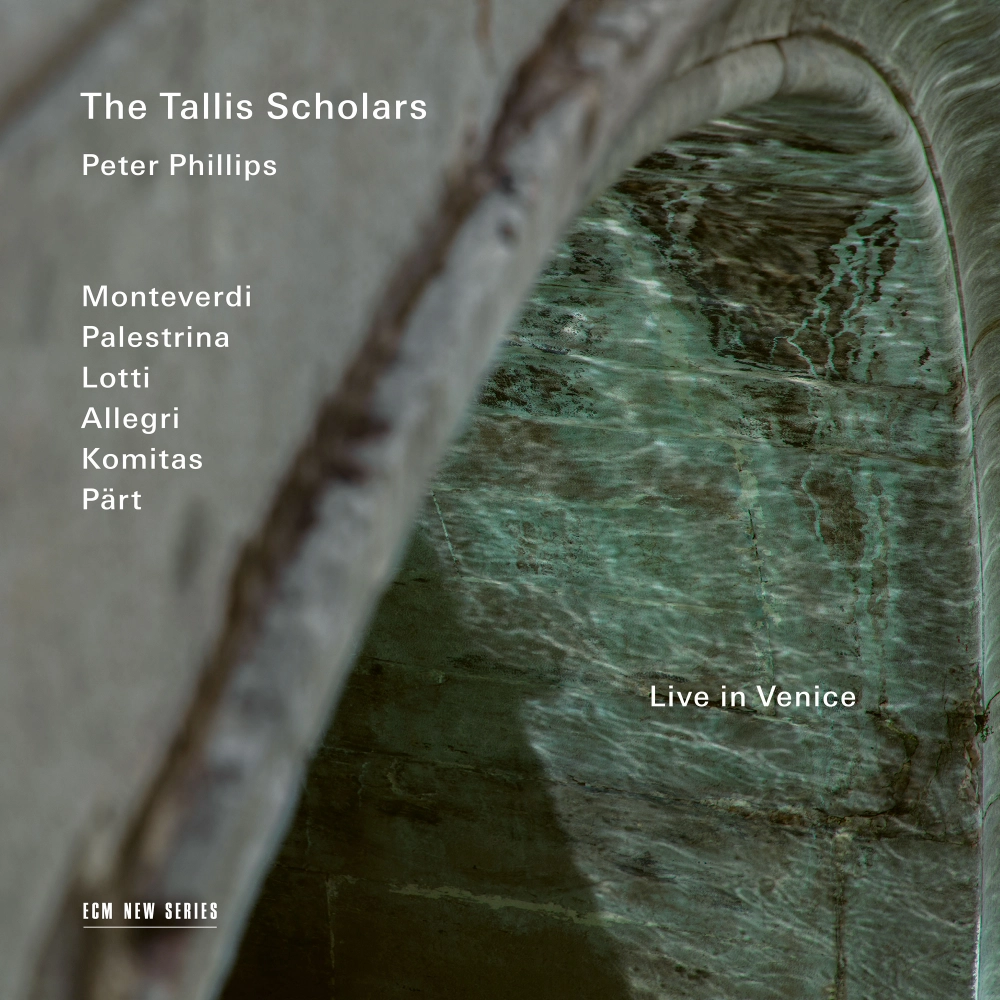
The upcoming album Live In Venice by the Tallis Scholars enchants a German reviewer
In der Mitte der CD, auf Platz 8 von 16 Titeln, steht das berühmte 12-minütige ‘Miserere’ von Gregorio Allegri, das den Eindruck vermittelt, Musik könne sich selbst transgredieren, in puren Wohlklang auflösen. Was die Stimmen der Tallis Scholars und ihrer Solistin Amy Haworth da hervorzaubern, raubt einem den Atem. […] Die Tallis Scholars treten in Venedig mit einem zehnköpfigen, also einem für einen Kammerchor eher kleinen Ensemble auf: mit vier Sopranen, zwei Alten (eine Frau, ein Mann), zwei Tenören und zwei Bässen. Die Dominanz der doppelt besetzten hohen Frauenstimmen ist maßgeblich verantwortlich für die Eigenart des Klangs. Die raffinierte Akustik des Markusdoms, der ungewöhnlich lange Nachhall tun ein Übriges. Es gibt wohl kaum eine Zusammenstellung, die man mit größerem Recht ‘geistlich’ nennen dürfte als diese. Und doch: wer könnte jemanden widerlegen, der darauf besteht, dass es sich um ‘absolute’ Musik in höchster Vollendung handelt.
Thomas Rothschild, Kultura Extra
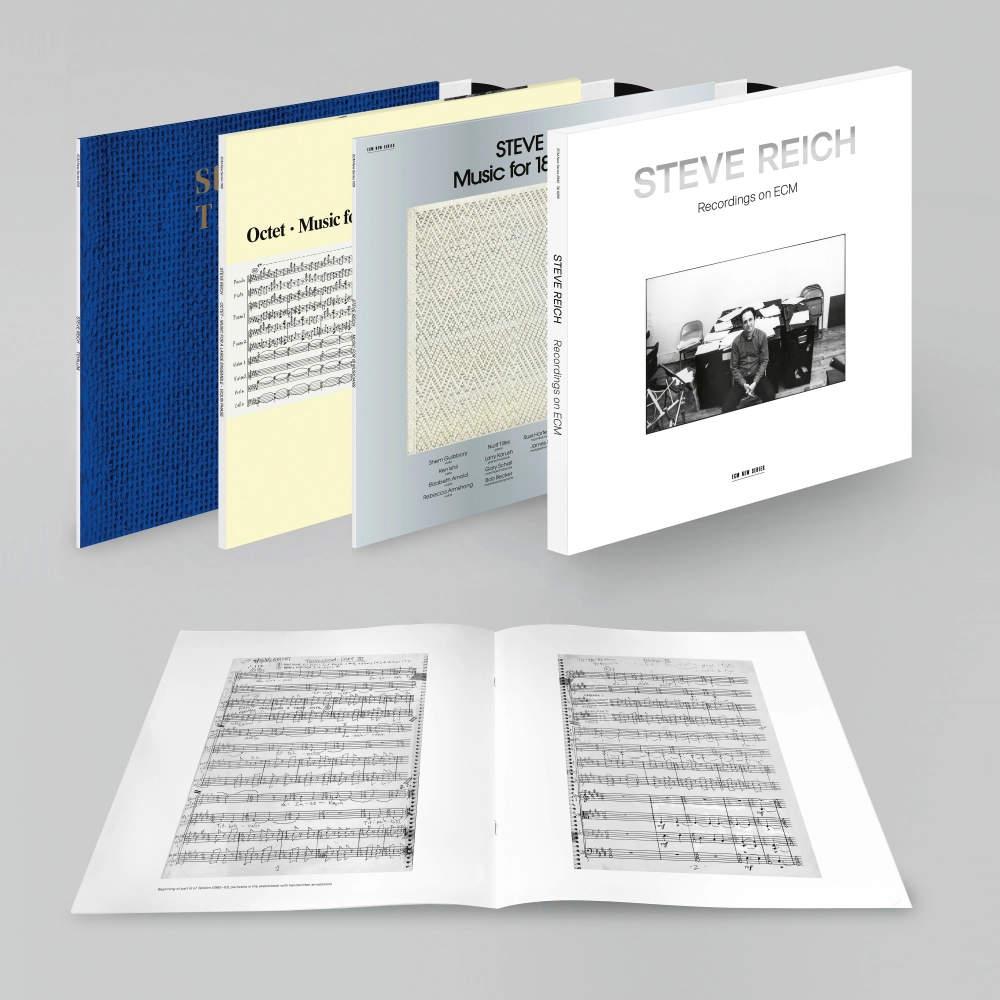
The re-issue of the box-set Steve Reich Recordings on ECM on vinyl is welcomed by US and UK media
Listening to the ECM album ‘Octet ∙ Music For A Large Ensemble ∙ Violin Phase’ is a revelation. There is a crystalline clarity, a depth of space, a feeling for the unique functions and qualities of each voice that its predecessor just doesn’t quite have. It has the sheen of great pop – and used many of the same techniques (such as close-miking each instrument, the artful application of electronic reverberation). ‘18 Musicians’ is the faithful document of a live performance; ‘Music For A Large Ensemble is something else.’ Few twentieth-century composers of instrumental music are as inseparable from the process of recording as Reich. The phasing technique that structured early works like ‘Piano Phase’ and ‘Reed Phase’ was directly inspired by observing the effect of tape loops spooling out of sync. It is impossible to imagine the process music of his early, experimental years absent that technology. The composer’s second, imperial phase arguably starts from his work with Eicher at the turn of the 1980s. As Paul Griffiths notes in his liner notes to the collection, ‘Tehilim’, their third album together, marked the birth of ‘a new era’ – and not just for Reich and ECM. Music would never be the same again.
Robert Barry, The Quietus
‘Music For 18 Musicians’ was a crossover hit with listeners, and its success launched a short but productive collaboration that found Reich experimenting with tape loops on ‘Violin Phase’ and denser arrangements on ‘Music For A Large Ensemble’, both released in 1980. His final ECM work was ‘Tehilim’, which examines his Jewish heritage and essentially deconstructs the word ‘hallelujah’. This 3LP set, featuring new liners by the writer Paul Griffiths, not only chronicles a pivotal moment in Reich’s career, but tells a compelling story of exploration and revelation.
Stephen Deusner, Uncut
The album Salt Catchers by the Andy Sheppard Trio is recommended by Austrian and Italian media
Jedenfalls ist die Einspielung ein Hort subtiler Schönheit, die mit gestalterischer Gelassenheit erarbeitet wird. Ein Stück von Carla Bley, mit der der Brite viel zusammengearbeitet hat, ist auch dabei. ‘Lawns’ zeigt Sheppard als Improvisator, der auch in zurückgelehnter poetischer Spielpose die Spannung halten kann und mit klanglicher Raffinesse punktet. Seine Kollegenschaft zeigt geschmackvoll, wie Kommunikation und gutes Zuhören ein musikalisches Gesamtgebilde von edler Substanz erbringen können. Coolness mit Tiefgang.
Liubjša Tošić , Concerto
Il sassofonista britannico prosegue nella sua esplorazione di acque dolci, calme e appartate, rinunciando ancora una volta al naturale generatore dinamico della batteria in favore di un tono introspettivo e delicato in cui la melodia e l’intima intesa dell’interplay si fanno cuore pulsante della narrazione. I brani originali, composti nei mesi lenti e silenziosi del covid, riservano un ruolo centrale al pianoforte, che trova nel lirismo di Rita Marcotulli, alla sua prima su ECM, una voce sensibile e perfettamente pertinente. Completa il trio la discrezione illuminata di Michel Benita, in un raffinato equilibrio armonico.
Alessandro Hellmann, Rockerilla
Ègià tutto racchiuso nell’apertura di quinta di dominante che non risolve immediatamente, l’essenza della nuova registrazione del sassofonista britannico Andy Sheppard: trattenere un po’ il piacere armonico, non rivelare tutto subito. ‘Salt Catchers’ (pubblicato dalla ECM) è un disco caratterizzato da grandi aperture armoniche di tradizione, da un grandissimo lirismo, davvero degno, insieme ad un suono sassofonistico di caratura, di poter essere accostato alle grandi voci del nuovo millennio. Ed è quindi una registrazione intensa e sognante, quasi uno studio sul lirismo, piena di ballads condotte con eleganza e senza banalità armoniche, quella del sassofonista Sheppard, che sembra voler omaggiare Carla Blay e Steve Swallow, anche nella scelta di non usare un supporto ritmico. Il tutto fa propendere e sviluppare la registrazione in termini di ‘orizzontalità’. […] the least immediately striking piece, but one filled with a fluid narrative that is always looking forward.
Simeone Pozzini, Il Corriere della musica
The album Ritonare by Enzo Favata and his Quintetto Atlantico is recommended in an Italian magazine
‘Ritornare’ è un album che non aggiunge altri mondi all’universo già ricco di Enzo Favata, ma ne mette a fuoco le stratificazioni, come se il tempo, invece di depositare soltanto esperienza, avesse lentamente eliminato ciò che non era essenziale. E allora il ritorno evocato dal titolo non coincide semmai solo con il ritrovare il proprio punto di partenza. Tornare significa scoprire che tutto cambia e come la saggezza consista nell’accettare questa inevitabile trasformazione. Forse è proprio tutto ciò che caratterizza l’atmosfera malinconica che pervade l’album, un clima caratterizzato da una continua dissolvenza del paesaggio musicale, per altro molto evocato e riconoscibile nei suoi confini mediterranei. […] La riunione del quintetto Atlantico, avvenuta nel 2023 dopo diversi anni di separazione, non produce l’effetto nostalgico di una formazione che cerca di ricostruire se stessa. Al contrario, il gruppo sembra interrogarsi su nuove possibilità da indagare nel presente. Enzo Favata, Marcello Peghin, Daniele Di Bonaventura, Salvatore Maltana e U.T. Gandhi non si comportano come musicisti intenti a ricomporre le pose di una vecchia fotografia, bensì come persone che si incontrano nuovamente sapendo di non essere più le stesse del passato. La performance che ne scaturisce possiede infatti una singolare capacità di trattenere salda la propria storia senza esibirla. È una musica di sostanza caratterizzata da una particolare forma di umiltà che ne allontana l’autocelebrazione e questa è una qualità umana tanto più preziosa quanto più evidente è la statura dei musicisti coinvolti. Il risultato è un organismo di particolare finezza, nel quale ogni strumento possiede un carattere riconoscibile ed un timbro quasi di natura amichevole. Il soprano di Favata conserva una duttilità di tipo vocale, potendo diventare sottile, meditativo, persino ombroso, oppure assumere una luminosità che sembra provenire da un tempo arcaico. I clarini introducono invece ad una dimensione più terrestre, fatta di legno, fiato e gravità. […] Anche la presenza di Manfred Eicher e l’ingresso nel catalogo ECM acquistano, in questa prospettiva, un significato che supera l’esclusivo dato discografico. Registrato ai Bavaria Musikstudios nel gennaio 2026, con la mano felice dell’ingegnere del suono Stefano Amerio, Ritornare beneficia di una concezione dello spazio nella quale ogni particolare può assumere peso senza diventare ingombrante. Il suono non viene lucidato fino a perdere la propria fisicità ma lasciato a dilatarsi naturalmente come la sequenza d’un respiro.
Riccardo Talamazzi, Off Topic Magazine
The album Windflower by Ayumi Tanaka, Thomas Morgan and Thomas Strønen is reviewed in Austrian, German and Italian magazines
Der subtile, sehr von Stille wie auch vom Klang geprägte Sound von ‘Windflower’ ist in seiner Intensität trotz der Zurückhaltung der drei beteiligten Musiker auffällig. […] Tanakas Klavierspiel lebt von äußerster Konzentration. Das Trio verwebt abstrakte und lyrische Ideen zu Stücken, deren Fluss und Energie von Kammermusik, klassischer Romantik und Jazz gleichermaßen geprägt sind. […] Impressionistische Stücke mit intelligenten und zarten Melodien prägen diese CD. Auch wenn Tanaka wie in ‘From Us To You’ mit sehr gedämpften Klavieranschlägen arbeitet, kommt es doch zu erstaunlicher Vielschichtigkeit. Die Weite des Klangs erfordert Geduld, das Einlassen darauf wird mit Ablenkung von der Hektik des Alltags belohnt. Irgendwann driftet man in die freie und kreative Welt von ‘Windflower’ ein und genießt.
Arnold Loimer, Concerto
Abstrakte Pianoassoziationen, in denen Motive wie Leuchtspuren das Geschehen forcieren, mystische Trommelrhythmen und narrative Basslinien kennzeichnen eine neue Triokonstellation. […] Wie einfühlsam die mit der ECM-Ästhetik bestens übereinstimmenden Musiker agieren, zeigt sich in ihren acht gemeinsam konzipierten Themen. Allein ‘La Source’ geht auf Ayumi Tanaka zurück. In dem Stück lässt sich die Gestaltung ihrer singulären Klangwelt eindringlich nachempfinden.
Gerd Filtgen, Stereo
Nel suo nuovo progetto in trio, la pianista giapponese di stanza a Oslo integra nella consolidata collaborazione con il batterista norvegese Thomas Strønen le fluide linee di basso di Thomas Morgan, innescando un interplay non convenzionale. Il lirismo ritmico di Strønen, sempre più proiettato verso raffinate geometrie astratte, crea quel tempo sospeso entro cui il tocco preciso e minimale di Tanaka può ingaggiare un dialogo umorale con il silenzio e una ricerca timbrica di sfumature sottili, labili, rarefatte, quasi impalpabili. Leggerezza profondità convivino senza pesi o ttacamenti, alimentadosi a vicenda, come nella practica zen.
Alessandro Hellmann, Rockerilla
UK and Italian reactions to the vinyl re-issue of Illusion Suite by the Stanley Cowell Trio within the Luminessence series
This sole recording for ECM is quite special, and definitely worthy of inclusion in the prestigious Luminessence reissue series. As was abundantly clear in the early stage of his career, above all when he was working with Max Roach, Cowell was a gifted composer. His melodies were often a cunning blend of harmonic restraint, skilled use of space, and decisive rhythmic movement that could be as understated as emphatic.
Kevin Le Gendre, Jazzwise
L’album è una meravigliosa parentesi di spiritual jazz all’interno dello sterminato catalogo della ECM, costruita dal talentuoso pianista americano in compagnia del formidabile bassista Stanley Clarke e del fidato batterista Jimmy Hopps. Sulle due facce dell’Lp, appena ristampato nella sontuosa Luminessence series, si rincorrono sei brani, equamente divisi tra lato A e lato B, che raccontano storie di un mondo sospeso tra illusione e spiritualità.
Roberto Mandolini, Rockerilla


